You Won’t Believe What’s Hiding in Phoenix—Secret Architecture Gems Most Miss
Phoenix isn’t just desert heat and cacti—there’s a hidden side most travelers never see. I stumbled upon architectural wonders tucked in plain sight: mid-century modern homes, adobe masterpieces, and bold desert futurism. These structures don’t just stand out—they tell stories of culture, climate, and creativity. If you think Phoenix is just a pit stop, think again. This city’s design soul is quiet, unexpected, and absolutely worth exploring.
The Desert Canvas: How Phoenix’s Landscape Shapes Its Architecture
The Sonoran Desert is more than a backdrop—it’s a living blueprint for architecture in Phoenix. With summer temperatures regularly exceeding 110°F (43°C), the environment demands thoughtful design. Buildings here are not imposed on the land; they grow from it. Architects prioritize harmony with the natural terrain, crafting structures that respond to sunlight, wind patterns, and topography. Low-slung homes hug the earth, minimizing exposure to the sun while maximizing shade. Flat or gently sloping roofs blend into the horizon, allowing buildings to appear almost as natural extensions of the desert floor.
Passive cooling is central to this architectural philosophy. Thick walls made from materials like adobe or insulated concrete reduce heat transfer, keeping interiors cooler without overreliance on air conditioning. Overhanging eaves, deep porches, and strategically placed windows allow cross-ventilation and filter direct sunlight. Courtyards and atriums act as thermal chimneys, drawing hot air upward and pulling in cooler breezes from shaded areas. Native vegetation such as mesquite and palo verde trees are often integrated into landscaping, providing natural shade and reducing ambient temperatures around homes.
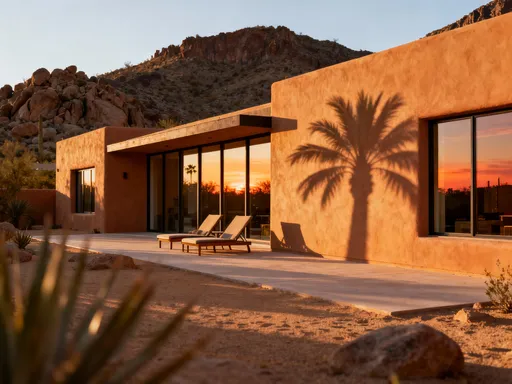
Local architects also embrace the desert’s palette. Earth-toned stucco, sandstone cladding, and rust-colored metal roofs echo the surrounding hills and washes. This visual continuity helps structures feel grounded rather than intrusive. Even modern developments increasingly incorporate boulders and desert flora into their layouts, preserving the site’s original character. The result is a built environment that respects the desert’s intensity while offering comfort and beauty. In Phoenix, architecture isn’t about conquering nature—it’s about learning to live within it.
Mid-Century Modern Meets the Southwest: A Design Love Story
Between the 1940s and 1970s, Phoenix became an unlikely epicenter of mid-century modern architecture. Influenced by pioneers like Frank Lloyd Wright and Ralph Haver, local designers adapted sleek, minimalist aesthetics to the demands of desert living. Neighborhoods such as Arcadia, Town and Country, and Encanto became showcases for clean-lined homes with open floor plans, floor-to-ceiling glass walls, and seamless indoor-outdoor transitions. These homes were not just stylish—they were practical responses to climate and lifestyle.
One of the defining features of this era is the integration of outdoor space into daily life. Sliding glass doors open onto covered patios, often shaded by wooden pergolas or deep overhangs. Poolside lounging isn’t a luxury—it’s a necessity during long, hot months, and many homes were designed with the backyard as the true heart of the residence. Exposed wooden beams, brick accent walls, and built-in furniture reflect a design language rooted in warmth and simplicity. Haver Homes, a local builder active in the 1950s and 60s, produced thousands of modest yet elegant ranch-style houses that remain highly sought after today.
Preservation efforts have helped maintain the integrity of these neighborhoods. The Town and Country Civic Association, for example, has strict design guidelines to protect the area’s architectural character. Walking through these tree-lined streets feels like stepping into a time capsule—original carports, terrazzo floors, and vintage lighting fixtures remain intact in many homes. Guided tours offered during events like Modernism Week draw architecture enthusiasts from across the country. For those who appreciate timeless design, Phoenix’s mid-century legacy offers a masterclass in form meeting function.
Adobe Revival: Ancient Techniques in Modern Homes
Long before air conditioning and steel beams, Indigenous communities in the Southwest mastered the art of desert living through adobe construction. These sun-dried clay bricks, made from soil mixed with straw and water, have insulating properties ideally suited to extreme climates. In Phoenix, this ancient technique has seen a quiet revival—not as a relic of the past, but as a sustainable solution for modern homes. Adobe walls absorb heat during the day and slowly release it at night, helping maintain stable indoor temperatures year-round.
Today’s adobe homes honor traditional methods while incorporating modern advancements. Builders often use stabilized adobe—mixed with a small amount of cement—to increase durability and resistance to erosion. Exteriors are typically coated with lime-based plasters that allow the walls to breathe, preventing moisture buildup. The soft curves and organic textures of adobe give homes a handcrafted feel, distinct from the rigid geometry of conventional construction. Interiors feature rounded corners, arched doorways, and niches built into thick walls—details that add charm and cultural resonance.
This architectural style pays homage to both Native American and Hispanic building traditions. In areas like South Mountain and Laveen, families have passed down adobe-building knowledge for generations. Some contemporary architects blend adobe with glass, steel, and solar panels, creating homes that are both culturally grounded and technologically advanced. Cultural centers and museums, such as the Heard Museum, also use adobe elements in their design, reinforcing a sense of place and continuity. In a city shaped by rapid growth, adobe stands as a quiet reminder of resilience and connection to the land.
Futuristic Desert Domes and Eco-Homes
While some architects look to the past, others are reimagining the future of desert living through experimental designs. Across the Phoenix metropolitan area, innovative builders are testing new forms and materials that push the boundaries of sustainability. Geodesic domes, inspired by the work of Buckminster Fuller, appear in private compounds and off-grid communities. Their spherical shape reduces surface area exposed to the sun, improving energy efficiency, while their structural strength allows for large, open interiors with minimal support beams.
Earth-sheltered homes—partially buried into hillsides or bermed with soil—are gaining interest for their natural insulation properties. These structures maintain near-constant indoor temperatures, drastically reducing heating and cooling needs. Some feature green roofs planted with native succulents, which absorb rainwater and provide additional thermal regulation. Solar orientation is carefully calculated, with photovoltaic panels integrated into rooftops or mounted on sun-tracking systems to maximize energy capture.
Several eco-communities in the region serve as living laboratories for sustainable design. Homes in these developments often include rainwater harvesting systems, greywater recycling, and high-efficiency appliances. Materials like recycled steel, reclaimed wood, and non-toxic insulation are standard. While not all of these projects are open to the public, their influence is spreading. Local builders are adopting elements like super-insulated walls, thermal mass floors, and smart home technology to create energy-conscious residences that still feel warm and livable. This forward-thinking approach proves that innovation and comfort can coexist—even in one of the hottest regions of the United States.
Hidden Courtyards and Private Oases: The Culture of Secluded Design
In Phoenix, privacy and protection are more than personal preferences—they are design imperatives. Many homes turn inward, with exterior walls appearing closed off or unadorned, hiding lush, shaded retreats within. This inward-facing layout creates what architects call the “courtyard house” model—a tradition found in Mediterranean, Middle Eastern, and Southwestern cultures. The central courtyard becomes a private oasis, shielded from the sun and prying eyes, where families gather, dine, and relax in comfort.
These interior spaces often feature water elements such as fountains or reflecting pools, which enhance the sense of calm and help cool the air through evaporation. Potted citrus trees, bougainvillea vines, and desert-adapted plants add color and fragrance. Tile work in vibrant patterns or earthy tones covers patios and walkways, connecting the space to regional artistic traditions. Retractable awnings or lattice-covered ramadas provide flexible shade, allowing residents to enjoy the outdoors at any time of day.
The cultural significance of this design goes beyond climate control. It reflects a value placed on family, hospitality, and tranquility. Unlike homes designed to impress from the street, these residences prioritize lived experience over appearance. Guests often don’t realize the full beauty of a home until they pass through a modest gate and enter the courtyard. This sense of discovery mirrors the broader experience of Phoenix itself—unassuming at first glance, but rich with hidden depth. For homeowners, these private sanctuaries offer a daily escape from the city’s pace and heat, reinforcing the home as a true refuge.
Architectural Walks Off the Beaten Path: Where to See These Gems
Exploring Phoenix’s architectural treasures doesn’t require special access or insider connections. Many of the city’s most striking homes are best appreciated from the sidewalk, especially in well-preserved neighborhoods where design integrity remains intact. Early morning or late afternoon—known as the golden hour—offers the ideal lighting for photography and observation, with long shadows highlighting textures and forms. Comfortable walking shoes, a wide-brimmed hat, and plenty of water are essential for any architectural stroll in the desert climate.
The Arcadia neighborhood, located east of Camelback Road, is a prime destination for mid-century modern lovers. Tree-lined streets and spacious lots provide unobstructed views of classic ranch homes with carports, clerestory windows, and expansive glass walls. Nearby, the Town and Country district showcases post-and-beam construction and open-plan designs that defined 1950s suburban elegance. Residents here take pride in maintaining original features, making it a living museum of mid-century aesthetics.
For a more structured experience, Taliesin West in Scottsdale offers guided public tours. This winter home and school founded by Frank Lloyd Wright sits at the edge of the McDowell Mountains and exemplifies organic architecture—where buildings emerge from the desert landscape with minimal disruption. The use of local stone, canvas roofs, and angular geometries creates a space that feels both futuristic and ancient. Visitors learn not only about Wright’s vision but also about the apprentices who helped build the compound by hand.
Responsible viewing is crucial. While it’s tempting to linger or take photos, visitors should respect privacy and avoid trespassing. Many homes are still private residences, and uninvited entry is both illegal and disrespectful. Instead, focus on public spaces, attend open house events hosted by preservation groups, or join walking tours led by local historians. The Phoenix Historic Neighborhoods Coalition occasionally organizes neighborhood tours that highlight architectural significance and community efforts to protect heritage. These experiences deepen appreciation while supporting local stewardship.
Why This Matters: Preserving Phoenix’s Architectural Identity
As Phoenix continues to grow—ranked among the fastest-growing large cities in the U.S.—its architectural character faces increasing pressure. New developments often prioritize density and speed over design sensitivity, risking the loss of historic neighborhoods and unique building traditions. Yet, the city’s identity lies not in its skyline, but in its quiet streets, hidden courtyards, and sun-tempered walls. Preserving this legacy is not just about nostalgia—it’s about sustainability, cultural continuity, and community well-being.
Organizations like the Arizona Preservation Foundation and local neighborhood associations are working to designate historic districts and advocate for adaptive reuse of older buildings. In some areas, zoning regulations now require developers to incorporate shade structures, desert landscaping, and energy-efficient materials—standards inspired by traditional and mid-century practices. These policies recognize that the best solutions for desert living often come from lessons already learned.
Travelers, too, play a role in preservation. By seeking out and appreciating Phoenix’s architectural depth, visitors help elevate its cultural value. When people stop seeing the city as just a gateway to the Grand Canyon or a retirement destination, but as a place of design innovation and historical richness, attitudes begin to shift. Every adobe wall, every shaded patio, every thoughtfully placed window tells a story of human ingenuity in the face of extreme conditions.
Phoenix’s architecture invites us to look closer—to see beyond the heat and the sprawl, to the quiet creativity shaping its streets. It challenges the assumption that beauty only blooms in coastal cities or historic capitals. Here, in the heart of the desert, design is not an afterthought—it is a necessity, a craft, and an art. To walk through Phoenix with intention is to discover a city built not against the desert, but with it. And that, perhaps, is its greatest secret.