Carved in Stone, Alive with Culture: Lalibela’s Hidden Art World
Have you ever seen art that’s not in a museum but carved into the earth itself? In Lalibela, Ethiopia, ancient rock-hewn churches are more than religious sites—they’re living galleries of spiritual craftsmanship. I was unprepared for how deeply the artistry would move me. This isn’t just history; it’s a vibrant cultural dialogue etched in stone, where faith, tradition, and creativity merge in astonishing ways. Standing before a church carved entirely from solid rock, its cross-shaped windows glowing in the morning light, I felt a profound stillness, as though centuries of prayer had seeped into the air. Lalibela is not merely a place to visit—it is an invitation to witness a legacy where art and devotion are inseparable, where every chisel mark tells a story, and where culture breathes through stone.
First Impressions: Stepping into a Stone Universe
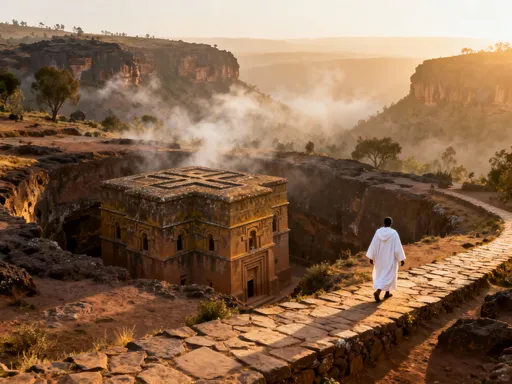
Arriving in Lalibela, nestled high in the Ethiopian highlands at over 2,600 meters above sea level, one is immediately struck by the clarity of the air and the quiet dignity of the landscape. The town, small and unassuming, seems to rise organically from the rocky terrain, its pathways winding between ancient stone outcrops and clusters of modest homes. But it is the presence of the rock-hewn churches that transforms the atmosphere into something almost otherworldly. These are not structures built upon the earth—they are carved directly out of it, excavated downward from a single mass of volcanic tuff, a soft rock that allowed artisans to sculpt entire sanctuaries with precision and care.
There are eleven major monolithic churches in Lalibela, each standing as an architectural marvel. Bete Giyorgis, the Church of St. George, is perhaps the most iconic, carved in the shape of a perfect cross and descending deep into the ground, accessible only by a narrow trench-like passage. To stand at its edge and look down is to witness a masterpiece emerging from the earth like a fossil revealed by time. The precision of the carving—the symmetry of its windows, the geometric patterns along its walls, the delicate crosses etched into stone—is astonishing, especially when one considers that these were created without modern tools, using only chisels, hammers, and human endurance.
What makes these churches more than architectural feats is their dual role as sacred and artistic spaces. Every surface tells a story. Facades are adorned with blind arches, cross motifs, and carvings believed to ward off evil. Pilgrims in flowing white garments move quietly between the churches, their prayers blending with the occasional toll of a handbell. The silence is broken only by the wind and the distant chant of a priest. There is no commercial noise, no intrusive signage—just the presence of devotion, centuries old, unfolding in real time. This is not a site frozen in history; it is a living sanctuary where art and worship continue to evolve together.
The Art of Faith: Where Religion Shapes Aesthetic Expression
In Lalibela, art does not exist for beauty alone—it is an extension of faith, a visual language of devotion. The churches were commissioned in the 12th century by King Gebre Mesqel Lalibela, a ruler deeply committed to the Ethiopian Orthodox Tewahedo Church. His vision was to create a New Jerusalem, a spiritual center for Ethiopian Christians who, due to war and distance, could no longer make pilgrimages to the Holy Land. The entire complex was designed with symbolic intent: the layout mirrors the geography of Jerusalem, with rivers, hills, and sacred pathways reimagined in stone. Bete Maryam (House of Mary), Bete Medhane Alem (House of the Savior of the World), and the other churches are positioned to reflect biblical narratives and theological truths.
Every architectural detail carries meaning. The orientation of windows aligns with the solstices, allowing sunlight to illuminate specific altars at key moments in the liturgical calendar. Crosses—carved in stone, painted on walls, worn around necks—are not merely decorative; they are central to identity and belief. Inside the churches, faded murals depict saints, angels, and scenes from the Bible, rendered in the Coptic tradition with bold lines, flat perspectives, and rich reds, yellows, and greens. Though many paintings have been restored over time, their style remains true to ancient forms, preserving a visual theology that has guided generations.
The artistry in Lalibela is not separate from ritual—it is part of it. A priest’s robe, handwoven with symbolic patterns, is as much a work of art as the church walls. The incense used in services, made from locally sourced resins, fills the air with a scent that has accompanied worship for centuries. Even the chants—sung in Ge’ez, an ancient liturgical language—are considered a form of sacred music, passed down orally through generations. In this context, creativity is not an individual pursuit but a collective expression of faith. The chisel marks on the stone are not just the work of anonymous hands; they are prayers made visible, devotion made permanent.
Beyond the Churches: Exploring Local Art Spaces and Craftsmanship
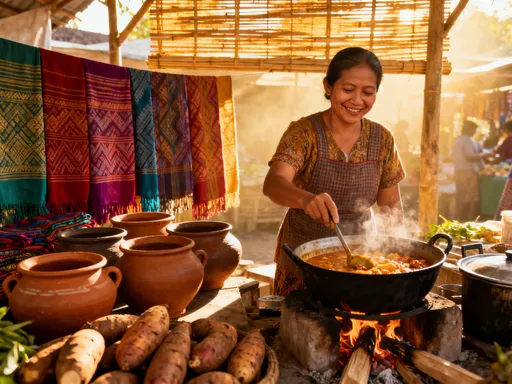
While the rock-hewn churches are the heart of Lalibela’s cultural identity, the town’s artistic spirit extends far beyond them. Just steps from the main archaeological site, small shops and open-air stalls line the narrow streets, offering handmade crafts that reflect both tradition and continuity. Local artisans weave cotton into shawls and tunics using foot-treadle looms, their patterns echoing those found in church textiles. Wooden crosses, intricately carved and often painted with crosses and biblical figures, are sold as both religious objects and cultural keepsakes. These are not mass-produced souvenirs—they are handcrafted with care, each piece bearing the mark of its maker.
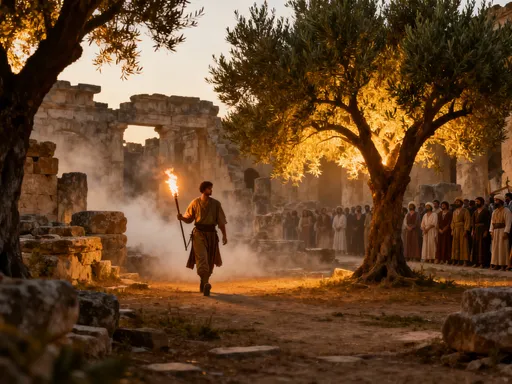
In recent years, a quiet but growing contemporary art scene has begun to emerge in Lalibela. Some guesthouses and cultural centers now host rotating exhibitions featuring Ethiopian painters, sculptors, and textile artists. These works often draw inspiration from the churches—depicting their silhouettes at dawn, their facades illuminated by torchlight, or their interiors filled with the movement of worshippers. One painter, working from a small studio near the market, uses natural pigments to recreate the colors of the ancient murals, blending historical reverence with modern expression. Another carver shapes soapstone into miniature replicas of Bete Giyorgis, each one a testament to the enduring fascination with Lalibela’s architecture.
These informal galleries and workshops serve as bridges between past and present, showing how tradition can inspire innovation without losing its essence. For visitors, engaging with these artists offers a deeper understanding of the culture. Purchasing a handwoven cloth or a wooden cross is more than a transaction—it is an act of cultural support, a way to contribute to the preservation of heritage. When travelers choose to buy directly from artisans, they help sustain livelihoods and ensure that traditional skills are passed on to younger generations. In this way, the art of Lalibela does not remain confined to the past; it continues to grow, adapt, and thrive.
The Role of Pilgrims and Priests as Cultural Keepers
The art of Lalibela is not only carved in stone—it is also carried in the hearts and hands of its people. Every day, priests in long, white robes move through the churches, performing rituals that have remained unchanged for centuries. They chant from illuminated manuscripts, their voices rising in melodic unison, while swinging brass censers that send plumes of fragrant smoke into the air. These processions are not performances for tourists; they are acts of devotion, part of a living liturgical tradition that transforms the churches into dynamic spaces of spiritual energy.
Priests in Lalibela are not only religious leaders—they are also custodians of art, music, and manuscript preservation. Many are trained from a young age in the complex chants of the Ethiopian Orthodox Church, a musical tradition that uses a system of nine melodic modes known as qenet. Some are skilled scribes, carefully copying religious texts by hand, preserving knowledge that might otherwise be lost. Others are responsible for the care of sacred textiles—embroidered veils, ceremonial robes, and altar cloths—each one a work of art in its own right. These roles, often passed down through families, ensure that the intangible aspects of Lalibela’s heritage are not forgotten.
Equally important are the pilgrims who journey from across Ethiopia to visit Lalibela. Many walk for days, some on their knees, to reach this holy site. They touch the walls of the churches, believing the stone holds healing power. They light candles, leave offerings, and pray in quiet corners. Their presence adds an invisible layer to the site’s cultural richness—an emotional and spiritual dimension that cannot be captured in photographs. It is their devotion that keeps the churches alive, not as relics, but as living spaces of faith. In this way, the art of Lalibela is not static; it is renewed daily by the people who honor it.
How to Experience Lalibela’s Art with Respect and Depth
To visit Lalibela is a privilege, but it must be done with mindfulness and respect. The churches are not museums; they are active places of worship. The most meaningful way to engage with the site is to approach it not as a tourist, but as a respectful guest. Hiring a local guide is one of the best decisions a visitor can make. Many guides are trained by the Ethiopian Heritage Authority and possess deep knowledge of the history, symbolism, and spiritual significance of the churches. They can explain the meaning behind carvings, point out architectural details, and share stories passed down through generations.
Dress modestly—shoulders and knees covered—as a sign of respect for the religious nature of the site. Photography is permitted in most areas, but always ask permission before photographing priests or pilgrims. Avoid touching the walls or carvings; even the oils from human skin can contribute to erosion over time. During services, remain quiet and observant, allowing the rituals to unfold without interruption. These small acts of consideration go a long way in honoring the sanctity of the space.
Timing can also enhance the experience. Early mornings offer the softest light, perfect for viewing the carvings without harsh shadows, and the fewest crowds. Sunset casts a golden glow over the stone, transforming the churches into silhouettes against the sky. For a truly immersive experience, plan a visit during Timket, the Ethiopian Epiphany festival in January, when thousands gather to celebrate the baptism of Jesus. The streets fill with chanting, drumming, and dancing, and the churches become the center of a vibrant, colorful procession. Experiencing Lalibela during such a festival reveals its art not as static objects, but as part of a living, breathing tradition.
Challenges and Preservation: Protecting Art in a Changing World
Despite its status as a UNESCO World Heritage Site since 1978, Lalibela faces significant challenges in preserving its unique heritage. The soft volcanic rock that allowed for such intricate carving is also vulnerable to erosion. Rainwater, wind, and temperature fluctuations gradually wear away at the stone, threatening both structural integrity and delicate carvings. In recent years, increased rainfall and climate variability have accelerated these effects, raising concerns among conservation experts.
To combat this, a joint effort between the Ethiopian Authority for Cultural Heritage Conservation and international partners, including UNESCO and the World Monuments Fund, has launched comprehensive preservation projects. These include installing drainage systems to divert rainwater, reinforcing weakened walls with compatible materials, and using 3D scanning technology to digitally document every surface of the churches. These digital records not only aid in restoration but also serve as a safeguard against potential future damage.
Another challenge is the growing number of visitors. While tourism brings economic benefits, unmanaged visitation can lead to overcrowding, wear on pathways, and pressure on local infrastructure. There is also the risk of over-commercialization—vendors setting up too close to sacred sites, or guides providing inaccurate information for profit. Sustainable tourism practices are essential. Travelers can help by choosing responsible tour operators, staying in locally owned accommodations that follow eco-friendly practices, and respecting site rules. By visiting with awareness, tourists become allies in preservation rather than contributors to degradation.
Why Lalibela’s Art Matters Beyond Tourism
Lalibela is more than a destination; it is a testament to what human creativity can achieve when guided by faith, patience, and purpose. In an age of rapid production and digital replication, Lalibela stands as a reminder of art born from devotion—crafted slowly, by hand, over generations. Its churches are not just places of worship; they are monuments to the enduring power of culture, where every chisel mark, every painted cross, every chant echoes a deeper truth about identity and belonging.
The art of Lalibela challenges modern assumptions about what art is and who it is for. It is not created for galleries or collectors—it is made for God, for community, for continuity. It does not seek to impress but to inspire. In a world where heritage sites are often reduced to photo opportunities, Lalibela invites us to look deeper, to listen, to participate with humility. When we do, we are not just observing history—we are becoming part of it.
By supporting responsible tourism, respecting local traditions, and engaging with the living culture of Lalibela, we help ensure that this extraordinary legacy endures. The stone may be ancient, but the spirit within it is alive. And as long as there are those who visit with reverence, who listen to the chants, who trace the carvings with quiet awe, the art of Lalibela will continue to speak—across time, across cultures, across the heart of what it means to be human.