Why I Stick to Qigong Every Morning — And Why Science Says You Might Want To
Have you ever felt tired despite sleeping enough? Or overwhelmed, even when nothing bad is happening? I used to feel that way—until I started a simple qigong routine. Not flashy, not intense, just consistent. Over time, I noticed something real: more energy, less stress, better sleep. It wasn’t magic. It was science meeting tradition. This isn’t about curing anything—it’s about supporting your body’s natural balance. And modern research is starting to back it up. Let me walk you through what changed for me—and what it could mean for you.
The Burnout Trap: Why Modern Life Disrupts Our Natural Rhythm
In today’s world, exhaustion is often worn like a badge of honor. Many women in their 30s, 40s, and 50s find themselves caught in a cycle of constant doing—managing households, careers, family needs, and personal expectations—all while feeling emotionally drained and physically sluggish. This isn’t burnout in the dramatic sense of complete collapse, but rather a low-grade, persistent fatigue that dulls focus, saps motivation, and erodes resilience over time. The body was not designed for perpetual activation. Yet, modern life keeps us in a near-constant state of sympathetic nervous system engagement—commonly known as the 'fight-or-flight' response—triggered not by physical danger but by endless notifications, work deadlines, and emotional responsibilities.
When the body remains in this state for prolonged periods, it disrupts essential processes like digestion, immune function, and sleep regulation. Cortisol, the primary stress hormone, stays elevated, impairing the body’s ability to recover and restore balance. This chronic imbalance contributes to issues such as poor sleep quality, weight fluctuations, low energy, and difficulty concentrating. The result is a system running on fumes, with little reserve for unexpected challenges. What many dismiss as 'just part of getting older' may actually be a sign of nervous system overload.
This is where qigong enters as a gentle but powerful counterbalance. Rooted in Traditional Chinese Medicine (TCM), qigong is a holistic practice that emphasizes rhythm, breath, and mindful movement to restore harmony between mind and body. Unlike high-intensity workouts that further stress an already taxed system, qigong works by activating the parasympathetic nervous system—the 'rest-and-digest' mode. Through slow, intentional movements and deep breathing, it signals safety to the body, allowing it to shift out of survival mode and into recovery. It doesn’t demand time, strength, or special equipment—just presence.
What Exactly Is Qigong? Separating Myth from Science
Qigong (pronounced 'chee-gong') translates to 'cultivating life energy.' While the term may sound esoteric, the practice itself is grounded in observable physiological principles. At its core, qigong is a mind-body discipline that combines slow, flowing movements, controlled breathing, and focused attention. It is not a religion, nor does it require any spiritual belief system. Instead, it functions as a form of moving meditation, accessible to people of all fitness levels and ages. Its roots in Traditional Chinese Medicine span thousands of years, but modern science is now providing evidence for its benefits.
One common misconception is that qigong is mystical or ineffective because it lacks the intensity of conventional exercise. However, research shows that its effects are measurable. Studies have demonstrated that regular qigong practice leads to reduced levels of cortisol, improved heart rate variability (HRV), and increased parasympathetic nervous system activity—all indicators of better stress regulation and overall resilience. For example, a 2013 meta-analysis published in the Journal of Psychosomatic Research found that qigong significantly reduced anxiety and improved mood across multiple clinical trials. Another study in the American Journal of Health Promotion showed measurable improvements in blood pressure and balance among older adults practicing qigong just three times a week.
What makes qigong unique is its ability to produce deep physiological changes without physical strain. The slow, deliberate movements enhance proprioception—the body’s awareness of its position in space—while synchronized breathing calms the nervous system. Unlike aerobic exercise, which elevates heart rate and metabolic demand, qigong lowers them, making it ideal for individuals managing fatigue, chronic stress, or health conditions that limit physical exertion. It’s not about pushing harder; it’s about tuning in. This subtle yet profound shift allows the body to repair, restore, and rebalance—functions that are often neglected in fast-paced modern lifestyles.
Why Routine Regularity Matters: The Body Loves Predictability
The human body operates best when it can anticipate what comes next. Biological systems—from hormone release to digestion to sleep-wake cycles—rely heavily on consistency. Circadian rhythms, for instance, govern everything from body temperature to alertness, and they function most efficiently when supported by regular daily patterns. When routines are erratic—such as inconsistent sleep times, irregular meals, or sporadic self-care—the body expends extra energy trying to adapt, leading to increased fatigue and reduced resilience.
This principle applies directly to wellness practices. Many people engage in self-care only when they feel overwhelmed—attending a yoga class after a bad week, going for a walk when anxiety spikes, or meditating during a crisis. While these efforts are beneficial, they function as reactive measures rather than preventive ones. In contrast, daily micro-practices like qigong offer cumulative, long-term benefits because they train the body to maintain equilibrium. Research supports this: a 2020 study in Frontiers in Psychology found that participants who engaged in short, daily mindfulness-based movement practices showed greater improvements in emotional regulation and fatigue reduction than those who practiced longer sessions infrequently.
Consistency also builds neural pathways that reinforce calm and focus. Just as repeated stress strengthens the brain’s threat detection system, repeated calm strengthens its capacity for regulation. By practicing qigong every morning, the body begins to associate that time of day with safety and restoration. Over weeks and months, this predictability becomes a powerful anchor—something reliable in an unpredictable world. The practice doesn’t need to be long or perfect. Even ten minutes a day, done regularly, creates a rhythm that supports mental clarity, emotional stability, and physical vitality in ways that occasional efforts cannot match.
How Qigong Influences Key Body Systems (Backed by Research)
The benefits of qigong are not merely subjective—they are supported by measurable changes in the body’s physiology. One of the most well-documented mechanisms is its effect on the vagus nerve, a major component of the parasympathetic nervous system. Slow, diaphragmatic breathing, a core element of qigong, stimulates the vagus nerve, which in turn slows heart rate, lowers blood pressure, and promotes relaxation. This process, known as vagal tone enhancement, is linked to improved emotional regulation, reduced inflammation, and better immune function.
Multiple studies have shown that qigong positively impacts immune markers. A 2016 study published in BMC Complementary and Alternative Medicine found that regular qigong practitioners had higher levels of natural killer (NK) cells—immune cells that help fight infections and abnormal cell growth—compared to non-practitioners. Additionally, research in the Journal of Hypertension has demonstrated that qigong can lead to modest but significant reductions in systolic and diastolic blood pressure, making it a valuable complementary approach for those managing cardiovascular health.
Another key benefit is its anti-inflammatory effect. Chronic low-grade inflammation is linked to numerous age-related conditions, including joint discomfort, fatigue, and metabolic imbalances. A 2014 study in PLOS ONE found that qigong practitioners exhibited lower levels of C-reactive protein (CRP), a marker of systemic inflammation, after eight weeks of practice. These changes occur gradually, not through force or intensity, but through repetition and mindful engagement. The body learns to return to baseline more efficiently, recovering faster from daily stressors and maintaining a state of balance over time.
Building a Sustainable Practice: The 10-Minute Daily Framework
One of the biggest barriers to starting a wellness practice is the belief that it must be time-consuming or complicated. Qigong defies that assumption. A sustainable daily routine can be as short as ten minutes and requires no special equipment or space. The key is structure and repetition. A simple framework includes three components: standing meditation, flowing movement, and seated breathing.
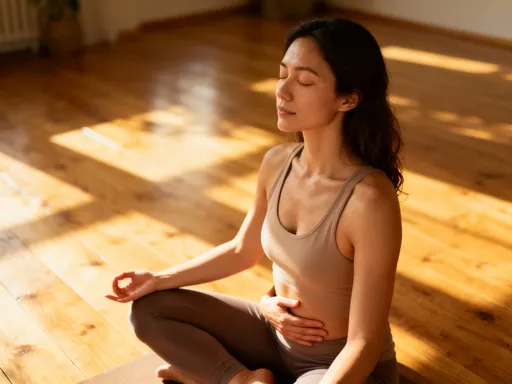
Begin with three minutes of standing meditation—feet shoulder-width apart, knees slightly bent, arms relaxed at the sides. Focus on the breath, inhaling slowly through the nose and exhaling through the mouth. Allow the shoulders to drop and the jaw to soften. This posture, known as 'standing like a tree,' helps ground the body and center the mind. Next, move into four minutes of gentle, flowing movements such as 'Lifting the Sky'—a classic qigong form where the arms rise slowly overhead on the inhale and lower on the exhale, coordinating breath with motion. This movement promotes circulation, loosens the joints, and enhances body awareness. Finish with three minutes of seated breathing—sitting comfortably with a straight spine, hands resting on the lap, focusing on deep, rhythmic breaths that expand the lower abdomen.
The best time to practice is in the morning, shortly after waking, when the mind is quiet and the day’s demands have not yet begun. However, early evening can also be effective for unwinding. Choose a quiet, uncluttered space—no need for a dedicated studio; a corner of the living room or bedroom is sufficient. The goal is not perfection but presence. It’s better to practice with slight imperfections every day than to wait for the 'perfect' moment that may never come. Over time, this small daily investment becomes a non-negotiable part of self-care, like brushing your teeth or drinking water.
Common Challenges and How to Overcome Them
Starting any new habit comes with obstacles, and qigong is no exception. One of the most common barriers is lack of time. Many women feel they already have too much on their plates. The solution is reframing: instead of seeing qigong as another task, view it as a reset that enhances everything else. Pair it with an existing morning habit—practice right after brushing your teeth or before making coffee. Even five minutes counts. The goal is consistency, not duration.
Another challenge is impatience. Some may expect immediate results—more energy, less stress—and become discouraged when changes are subtle. It’s important to understand that qigong works cumulatively. Benefits often appear gradually: a slightly better night’s sleep, a moment of calm during a hectic day, improved focus during a conversation. Keeping a simple journal to note small shifts—like feeling less reactive or waking up more easily—can help track progress and reinforce motivation.
Skepticism and self-consciousness are also common, especially for those unfamiliar with mind-body practices. The feeling of 'looking silly' while moving slowly or focusing on breath is normal at first. Using guided videos from reputable instructors can help build confidence and provide structure. Over time, as the benefits become real, the initial discomfort fades. Remember, the goal is not mastery but integration—making qigong a natural part of daily life, like stretching or sipping tea. Small progress is still progress, and every session contributes to long-term well-being.
Beyond the Individual: The Ripple Effects of Daily Practice
The benefits of qigong extend far beyond personal health. When energy levels stabilize and emotional regulation improves, the effects ripple outward into every area of life. At home, a calmer presence can ease household tensions and improve communication. At work, greater mental clarity supports better decision-making and focus. In relationships, increased patience and reduced reactivity foster deeper connections. These changes may seem small individually, but together they create a more balanced, resilient life.
Many women in midlife find themselves at the center of multiple roles—caregiver, professional, partner, friend. The demands can be overwhelming, and self-care often gets pushed aside. Yet, when personal well-being is neglected, everything else suffers. Qigong offers a quiet but powerful way to reclaim a sense of agency. It is not a quick fix or a dramatic transformation, but a daily act of self-respect. By showing up for yourself each morning, you send a message that your health matters.
Over time, this practice fosters a deeper alignment between internal state and external life. When the body feels balanced, decisions become clearer. When the mind feels calm, challenges feel more manageable. This internal stability creates a foundation for long-term resilience, helping navigate life’s inevitable changes with greater ease. Qigong is not about escaping stress—it’s about building the capacity to meet it with strength and grace.
In a world that glorifies busyness and constant output, choosing stillness is revolutionary. It is an investment not in perfection, but in sustainability. By dedicating just ten minutes a day to breath, movement, and presence, you support your body’s natural ability to heal, restore, and thrive. The science is clear: small, consistent actions yield profound results over time. Qigong is not a trend—it is a timeless practice meeting modern needs. If you’ve been searching for a gentle, evidence-based way to feel more like yourself, it may be worth trying. Start small. Stay consistent. Let your body lead the way. Always consult with a healthcare provider before beginning any new wellness practice, especially if you have existing health concerns.