How I Stuck With Exercise for Years—And Made It Social
For years, I started and quit workouts like everyone else—until I realized fitness isn’t just about willpower. It’s about connection. What changed? I stopped going solo and started moving with others. This shift didn’t just make exercise more fun—it made it last. If you’ve ever struggled to stay consistent, you’re not alone. The real secret isn’t intensity. It’s community. Countless women begin the year with strong intentions, only to fade by February or March. The issue isn’t laziness or lack of commitment. It’s a deeper truth: human beings are not wired to sustain difficult habits in isolation. When exercise feels like a solitary obligation, it becomes easy to skip. But when it’s woven into the fabric of relationships—shared laughter, mutual encouragement, simple companionship—it transforms. And that transformation is not just emotional. It’s behavioral, psychological, and long-lasting.
The Problem: Why Most Exercise Plans Fail
The journey toward fitness often begins with high hopes. A new pair of running shoes, a clean calendar, a fresh gym membership—everything signals a fresh start. Yet, for many women over 30, this momentum fades within weeks. The initial motivation, fueled by emotion or a specific goal like fitting into an old dress, eventually wanes. Without a sustainable structure, the routine collapses. This cycle of starting and stopping is so common that it has become the norm rather than the exception. Studies show that up to 50% of adults who begin an exercise program will drop out within six months. The reason is not a lack of desire. It’s the absence of a support system that helps maintain consistency when motivation dips.
Exercising alone increases the likelihood of quitting because there is no external accountability. When no one notices your absence, skipping a workout carries no consequence. Over time, these missed sessions accumulate. What begins as an occasional break becomes a pattern. The solitude of solo workouts also amplifies discomfort. A challenging mile feels longer when endured in silence. A difficult stretch seems more painful without someone to share the moment. Without encouragement or shared experience, physical activity can begin to feel like punishment rather than self-care.
Moreover, the expectation that discipline alone should carry someone through is unrealistic and often counterproductive. Discipline is a finite resource, especially for women juggling family, work, and personal responsibilities. Relying solely on willpower sets individuals up for failure. The human brain is wired for connection, not isolation. When fitness is framed as a solitary act of self-improvement, it ignores this fundamental truth. Long-term success in health behaviors depends not on how strong one’s resolve is, but on how integrated the habit is within daily life and relationships. The most effective fitness strategies are not those that demand more effort, but those that reduce resistance by making movement enjoyable and socially meaningful.
The Power of Social Connection in Physical Activity
Scientific research consistently shows that people are more likely to stick with exercise when they do it with others. A study published in the Journal of Social Sciences found that participants in group fitness programs reported higher levels of adherence, enjoyment, and perceived support compared to those who exercised alone. The presence of others does more than provide companionship—it activates psychological mechanisms that enhance motivation. When individuals feel seen and supported, their commitment deepens. Knowing that others expect you to show up creates a gentle but powerful form of accountability. It’s not about pressure; it’s about belonging.
Group dynamics also alter the perception of effort. A walk with a friend may feel easier than the same walk taken alone, even if the pace and distance are identical. This phenomenon, known as social facilitation, occurs because positive social interactions reduce the brain’s focus on fatigue. Laughter, conversation, and shared attention shift the experience from one of endurance to enjoyment. The body may be working just as hard, but the mind interprets the activity differently. This is especially important for women who associate exercise with struggle or guilt. When movement becomes a shared experience, it loses its punitive edge and gains emotional value.
Consider the contrast between two scenarios: a woman forcing herself through a cold morning run on a treadmill, eyes fixed on the clock, counting down minutes; and the same woman walking through a park with a friend, chatting about life, stopping to admire flowers, moving at a comfortable pace. Both involve physical activity, but the emotional context is entirely different. The second scenario is more likely to be repeated, not because it’s more intense, but because it’s more fulfilling. The body benefits from both, but only one nourishes the spirit. This is the essence of sustainable fitness—not how hard you push, but how connected you feel.
From Solo Grind to Shared Movement: My Personal Shift
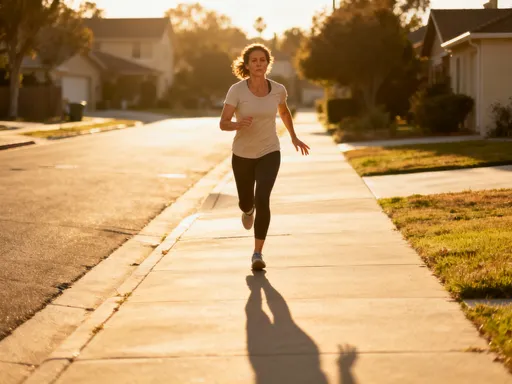
For years, my fitness routine was a cycle of determination and disappointment. I would wake early, lace up my sneakers, and head to the gym before the house stirred. The workouts were technically productive—weights lifted, miles logged—but emotionally draining. I often left feeling exhausted, not energized. The mirror became my judge. If the scale didn’t move or my clothes didn’t fit better, I felt like a failure. There was no celebration of effort, only scrutiny of results. Eventually, I stopped going. The silence of the empty gym echoed my isolation. No one noticed when I skipped. No one cheered when I returned.
The turning point came unexpectedly. A neighbor invited me to join a weekly walk in the neighborhood. I hesitated—wasn’t walking too slow to count as real exercise? But I agreed, mostly to be polite. That first walk changed everything. We didn’t rush. We talked about our children, our jobs, the books we were reading. We paused to watch a squirrel scramble up a tree. I didn’t check my watch once. By the end, I was surprised to realize we had walked for nearly an hour. And I wanted to do it again.
Over time, the group grew. We began meeting twice a week. When I missed a session due to a family obligation, someone texted to ask if I was okay. When I shared that I had been feeling stressed, they made space for that conversation. When I finally reached a milestone—walking five miles without stopping—the group celebrated as if it were their own victory. That sense of being seen and supported transformed my relationship with movement. I no longer exercised to punish or fix myself. I moved because it felt good to be part of something. The consistency followed naturally. I showed up not because I had to, but because I wanted to. And that made all the difference.
Types of Social Exercise That Actually Work Long-Term
Not all group activities lead to lasting change. The key is finding formats that prioritize enjoyment and accessibility over performance. High-intensity classes or competitive sports may appeal to some, but for many women, especially those returning to fitness after years away, low-pressure environments are more sustainable. The goal is not to become an athlete, but to make movement a regular, pleasant part of life. Walking groups are among the most effective options. They require no special equipment, can be adapted to any fitness level, and provide built-in conversation. Many communities have organized walking clubs that meet in parks, shopping centers, or neighborhoods. These groups often welcome newcomers and rotate leadership so no one feels burdened.
Dance classes are another excellent choice. Whether it’s Zumba, line dancing, or cultural dance styles, moving to music with others creates joy and reduces self-consciousness. The rhythm distracts from effort, and the shared energy lifts spirits. Recreational sports leagues—such as pickleball, tennis, or casual soccer—offer both physical activity and social connection. These are often organized through community centers or local parks departments and emphasize participation over competition. The emphasis on fun rather than skill makes them ideal for adults seeking light-to-moderate activity.
Another powerful option is the fitness buddy system. Pairing up with a friend, neighbor, or coworker creates a simple, flexible structure. Even two people can form a meaningful group. The accountability is personal, the pace adjustable, and the conversations private. Many women find that a weekly coffee-and-walk date or a post-dinner stroll with a spouse provides just enough structure to stay consistent. The most successful social exercise formats share common traits: they are regular but not rigid, inclusive rather than exclusive, and focused on connection as much as calories burned.
Building Your Own Sustainable Social Fitness Routine
Creating a lasting social fitness habit begins with self-awareness. Start by reflecting on what kinds of activities feel enjoyable, not punishing. Do you prefer quiet walks or lively classes? Do you enjoy structured events or spontaneous meetups? Identifying personal preferences increases the likelihood of follow-through. Next, consider your social environment. Who in your life might be interested in joining you? A sister, a neighbor, a coworker? You don’t need a large group to begin. One reliable partner can be enough to build momentum.
Invitations should be low-pressure. Instead of saying, “Let’s start a fitness routine,” try, “Would you like to walk with me after dinner this week?” or “I’ve been wanting to try that dance class—want to go together?” Framing it as an invitation to spend time together, rather than a fitness obligation, makes it more appealing. Starting small is crucial. A 15-minute walk is better than no walk. A single class is better than waiting for the “perfect” plan. Small, consistent actions build confidence and create a foundation for growth.
Common barriers include lack of time, shyness, and scheduling conflicts. For time, treat movement like an important appointment. Even 20 minutes twice a week can become a meaningful habit. For shyness, begin with someone you trust. You don’t have to join a large group right away. For scheduling, use shared calendars or set recurring dates. Flexibility is key—life changes, and routines should adapt. If a weekly walk becomes difficult during school holidays, switch to phone check-ins or shorter meetups. The goal is not perfection, but persistence. Over time, these small efforts accumulate into significant health benefits.
What Science Says: Long-Term Benefits Beyond the Body
The advantages of social exercise extend far beyond physical fitness. Research from Harvard University and the Mayo Clinic shows that individuals who engage in regular group physical activity report lower levels of stress, improved mood, and greater emotional resilience. The combination of movement and connection stimulates the release of endorphins, oxytocin, and other neurochemicals that enhance well-being. These biological responses are stronger in social settings than in solitary ones. In other words, moving with others doesn’t just benefit the body—it nourishes the brain.
Studies also link social exercise to reduced risk of anxiety and depression. A 2020 meta-analysis published in the British Journal of Sports Medicine found that group-based physical activity was associated with significantly greater improvements in mental health compared to individual exercise. Participants reported feeling less isolated, more supported, and more motivated to continue. The social component appears to amplify the psychological benefits of movement. This is particularly relevant for women in midlife, who may face transitions such as children leaving home, career shifts, or aging parents. These changes can increase feelings of loneliness, making social connection a vital form of emotional support.
Long-term adherence is another proven benefit. A study tracking adults over five years found that those who exercised with others were 50% more likely to maintain their routine than those who exercised alone. The reason? Social ties create a sense of responsibility and belonging. When people feel needed and appreciated, they are more likely to show up. These relationships also provide encouragement during setbacks. If someone struggles with energy or motivation, a friend might say, “Let’s go slow today,” rather than, “You should push harder.” This compassionate accountability is what makes social fitness sustainable.
Making It Last: How to Keep the Momentum Alive
Sustaining a social fitness routine requires intention. Over time, even the most enthusiastic groups can lose energy. Life gets busy. People move. Interests change. To prevent relapse into isolation, it’s important to build practices that maintain connection. Regular check-ins help. A simple text like, “Looking forward to our walk tomorrow!” reinforces commitment. Rotating activities keeps things fresh. A walking group might occasionally try a yoga class or a scenic hike. Variety prevents boredom and introduces new forms of movement.
Celebrating group wins—big or small—strengthens bonds. Did someone walk their first mile without stopping? Did the group reach 100 total miles together? Acknowledging these milestones fosters pride and unity. Celebrations don’t need to be elaborate. A photo, a shared meal, or a small token of appreciation can go a long way. The key is to recognize effort, not just outcomes.
Adaptability is essential. As seasons change, so might routines. Winter may call for indoor mall walking. A new baby in the family might mean shorter, more frequent meetups. The goal is not to stick rigidly to one format, but to preserve the core value: shared movement. When life shifts, the plan can shift too—without breaking. The most resilient habits are not the strictest, but the most flexible. And the most powerful motivation is not fear of weight gain or illness, but the simple desire to spend time with people who make you feel good.
Long-term fitness isn’t about pushing harder—it’s about staying connected. When exercise becomes something you share, not just something you do, it stops feeling like a chore and starts feeling like part of your life. The most effective workout plan isn’t the toughest one. It’s the one you enjoy enough to keep showing up for—especially when you’re not going alone. For women navigating the complexities of modern life, this shift can be transformative. It’s not just about stronger muscles or better endurance. It’s about stronger relationships, greater joy, and a deeper sense of belonging. And that, more than any number on a scale, is a measure of true health.